Expenses Incurred before Commencement of Business (or) Revenue
Generally, expenses incurred before a business starts its operations are not tax-deductible as these are incurred for the purpose of setting up the operations and not ‘wholly and exclusively’ for the production of income.
IRAS allows deductible for tax purposes for business in enterprise development, revenue expenses incurred one year prior to the deemed date of commencement of business.
Here are SEO-focused FAQs tailored for your blog on Corporate Income Tax for Pte Ltd companies in Singapore. They’re written naturally while targeting high-intent keywords:
Frequently Asked Questions (FAQs) – Corporate Income Tax in Singapore (Pte Ltd)
What is corporate income tax in Singapore for Pte Ltd companies?
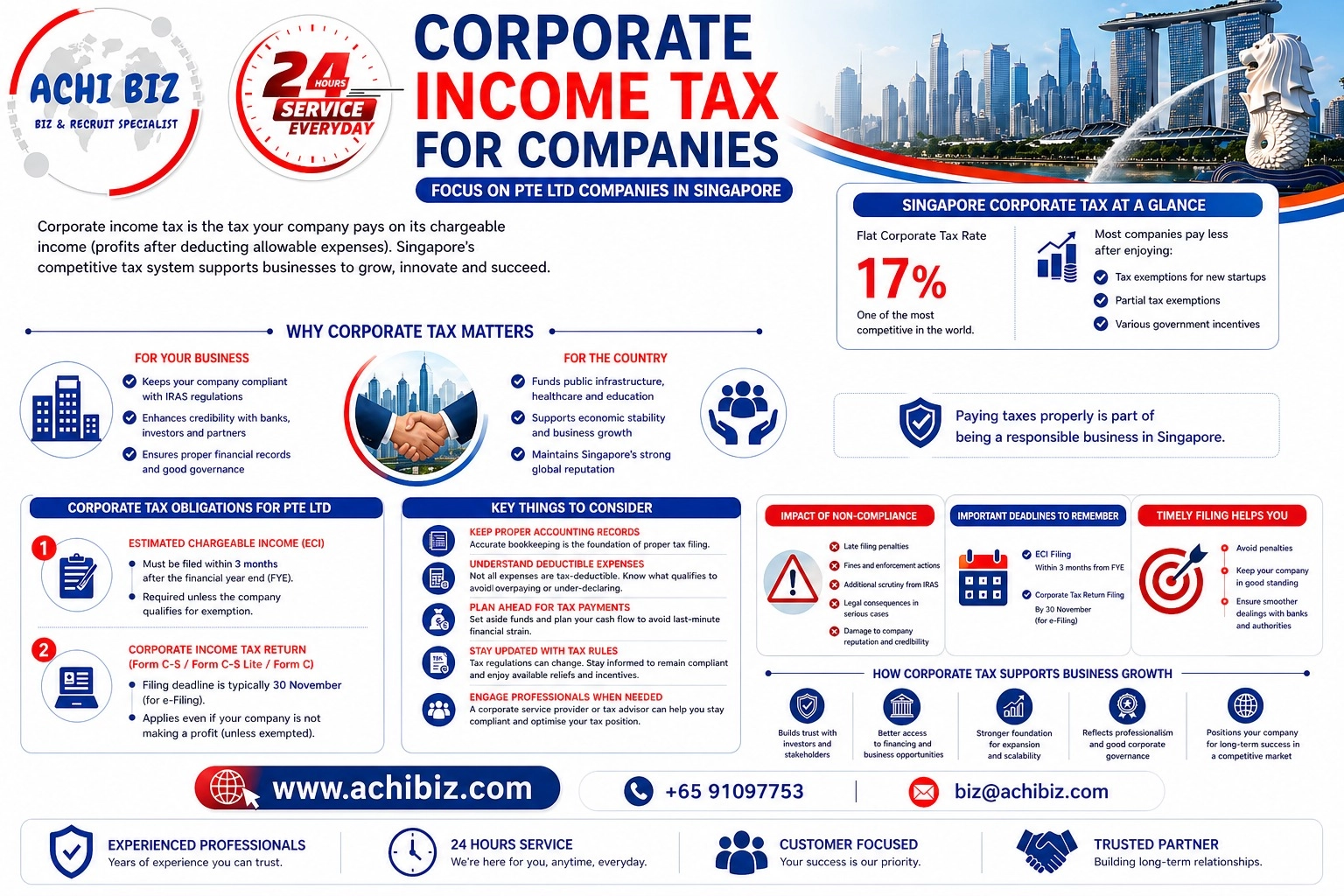
Corporate income tax is the tax a Pte Ltd company pays on its chargeable income, which is the profit after deducting allowable business expenses. The standard tax rate in Singapore is 17%.
What is the corporate tax rate in Singapore?
The corporate income tax rate in Singapore is 17%. However, many companies pay less due to tax exemptions for startups, partial exemptions, and government incentives.
Who needs to file corporate income tax in Singapore?
All Pte Ltd companies in Singapore must file corporate income tax returns with IRAS, even if they are not making a profit, unless they are specifically exempted.
What is Estimated Chargeable Income (ECI)?
ECI is an estimate of your company’s taxable profit for a financial year. It must be filed with IRAS within 3 months from the company’s financial year end.
When is the deadline for filing corporate tax in Singapore?
ECI must be filed within 3 months after the financial year end. The Corporate Income Tax Return (Form C-S, C-S Lite, or Form C) must be filed by 30 November (for e-filing).
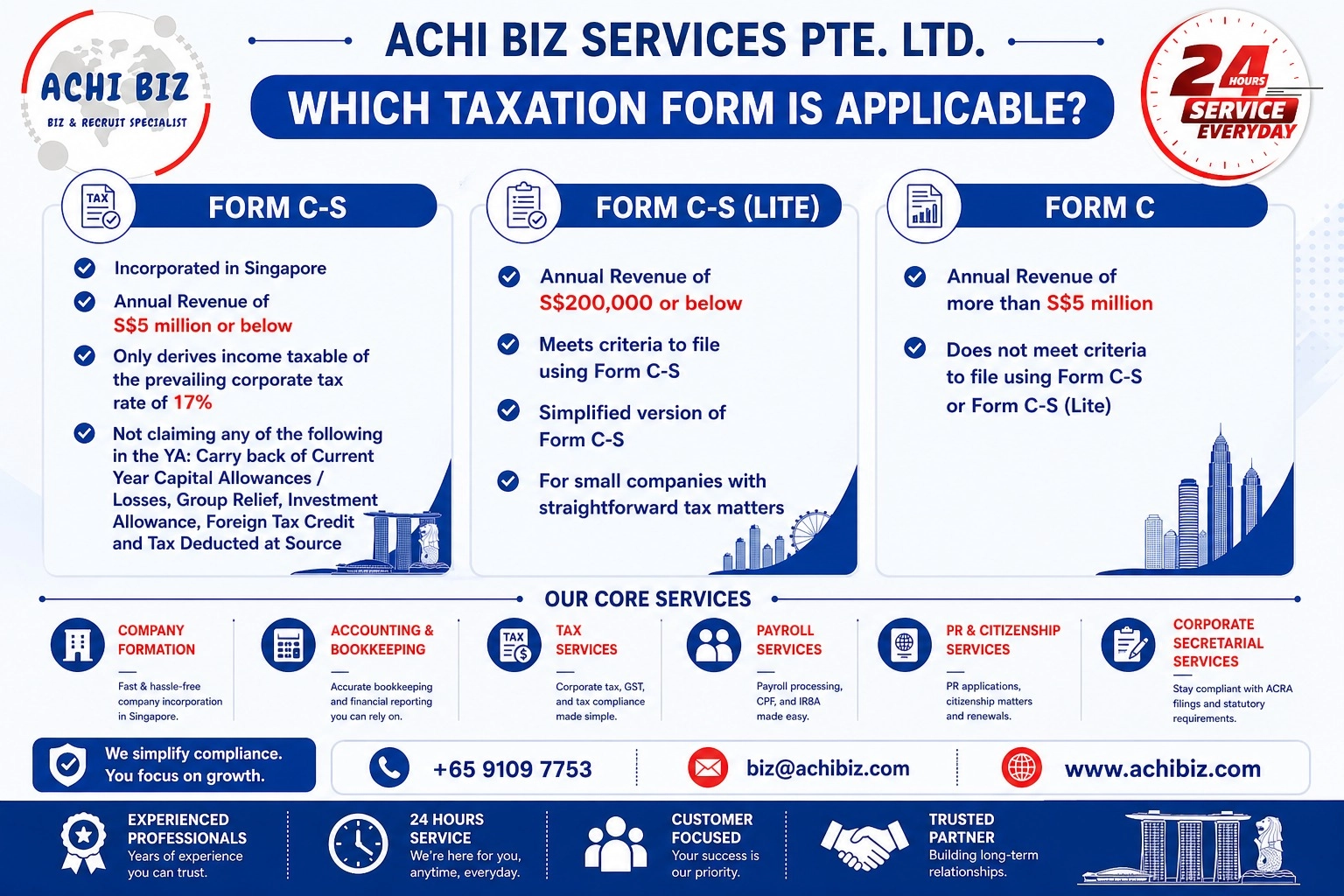
What is Form C-S and Form C-S Lite?
Form C-S and Form C-S Lite are simplified corporate tax return forms for qualifying companies. They reduce the need to submit detailed financial information compared to Form C.
Do I need to file tax if my company has no income?
Yes, most companies are still required to file corporate tax returns even if there is no income or profit, unless IRAS grants a filing waiver.
What expenses are tax-deductible in Singapore?
Generally, expenses that are wholly and exclusively incurred for business purposes are tax-deductible. Examples include staff salaries, rent, and operational costs.
What happens if a company does not comply with tax filing requirements?
Non-compliance can lead to late filing penalties, fines, enforcement actions, and possible legal consequences. It may also affect your company’s credibility.
Can I get tax exemptions as a new company in Singapore?
Yes, qualifying new startups may enjoy tax exemptions on their first few years of income, subject to IRAS conditions.
Why is corporate tax compliance important?
Proper tax compliance helps your company avoid penalties, maintain a good reputation, and build trust with stakeholders such as banks, investors, and partners.
How can I manage corporate tax effectively?
Maintain proper accounting records, understand deductible expenses, plan ahead for tax payments, stay updated on tax rules, and consider engaging a professional advisor.
Click here to learn more with FAQ on Tax Planning vs Tax Avoidance vs Tax Evasion