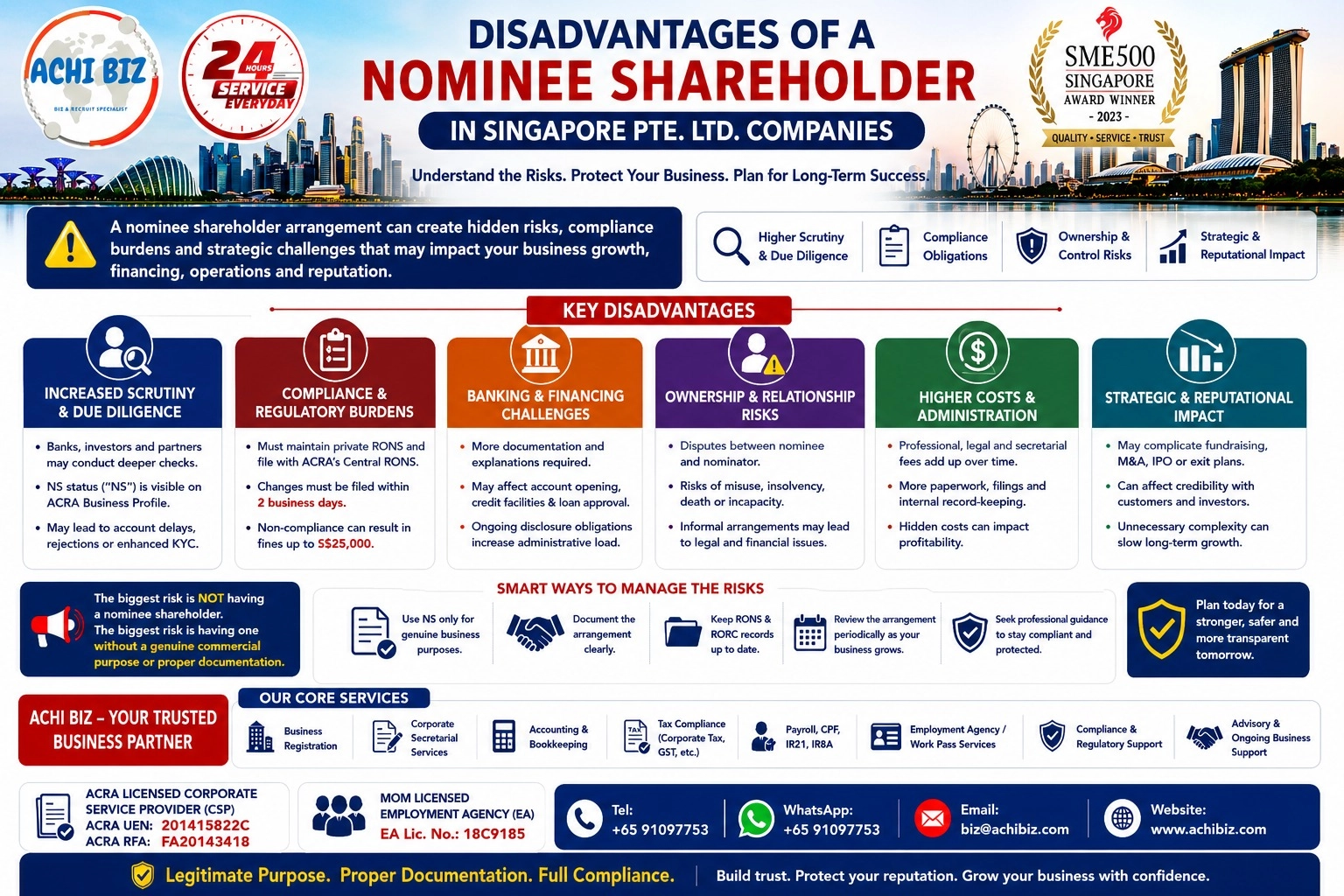
Disadvantages of a Nominee Shareholder in Singapore Pte. Ltd. Companies
Using a nominee shareholder may serve a legitimate business purpose, but it also comes with risks that should not be overlooked.
A nominee arrangement can lead to greater due diligence by banks, investors and business partners. It may also create additional compliance and documentation requirements, banking or financing challenges, ownership disputes, administrative costs and concerns over transparency or business reputation.
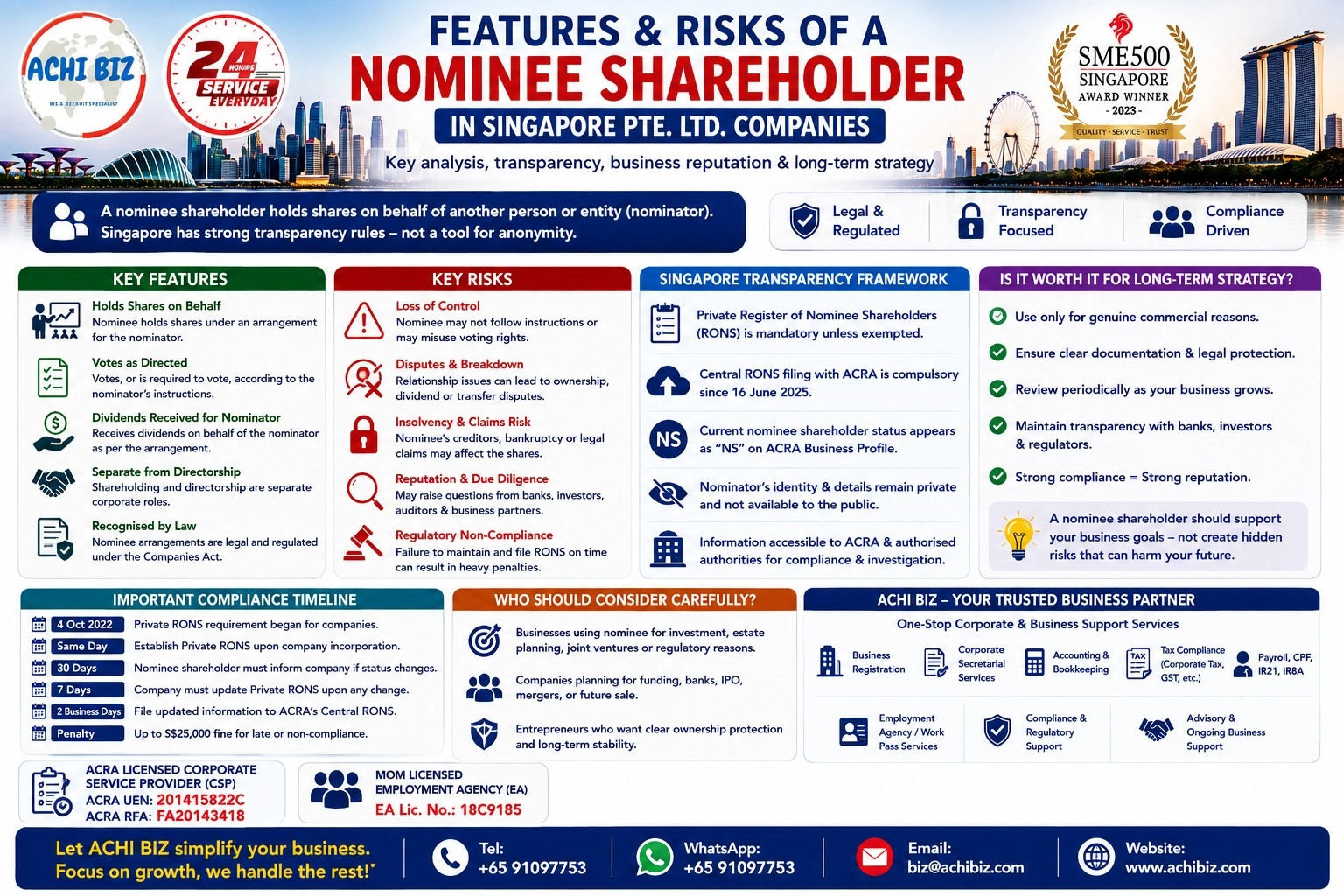
Singapore companies using nominee shareholders must also comply with applicable Register of Nominee Shareholders (RONS) requirements. Poor documentation, missed filings or unclear arrangements can expose the company and relevant parties to unnecessary compliance and legal risks.
For businesses planning fundraising, investment, M&A or long-term expansion, the structure should be considered carefully. The key issue is not simply whether a nominee shareholder is used, but why it is used, how the arrangement is documented and whether ongoing compliance is properly managed.