
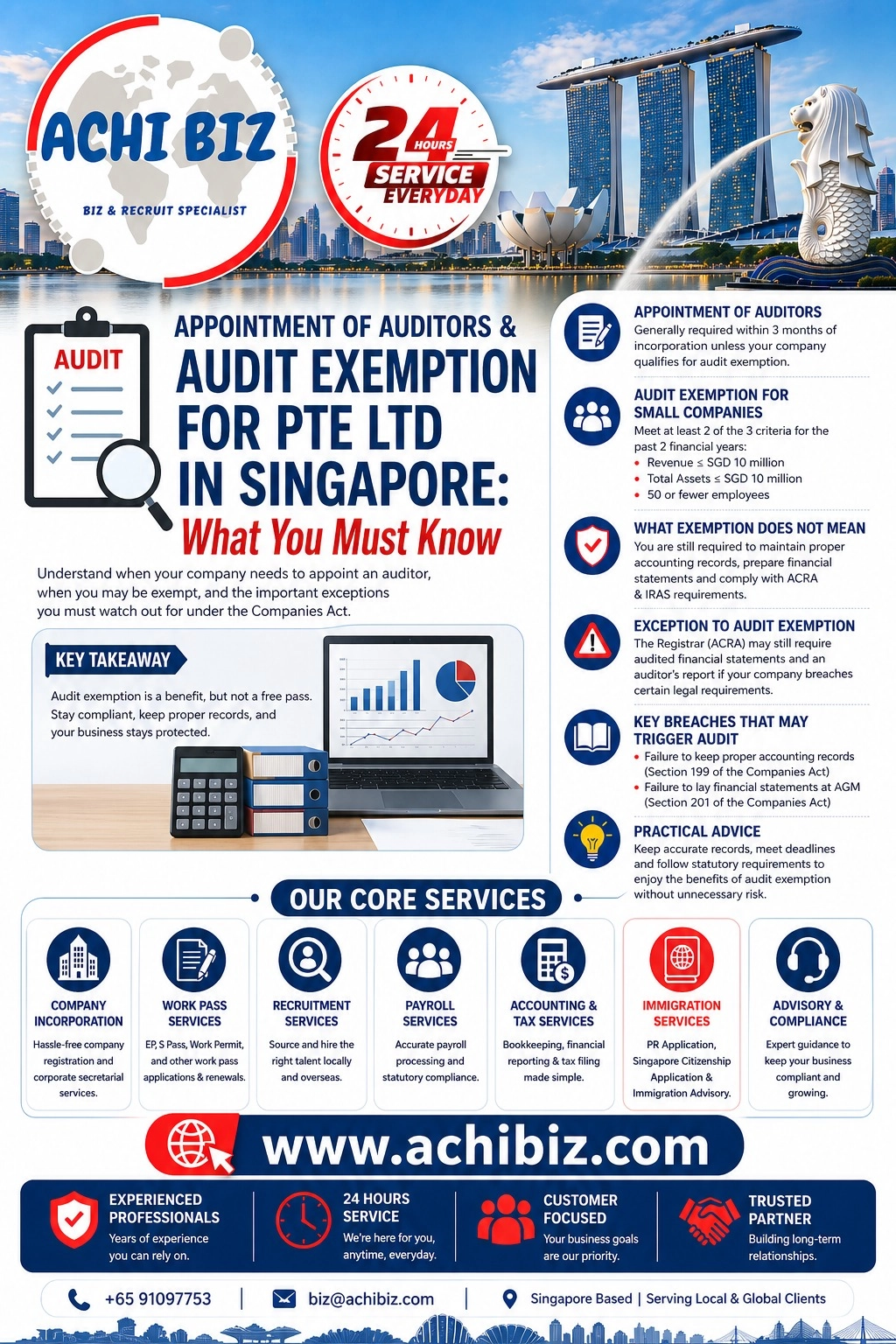
Appointment of Auditors & Audit Exemption for Pte Ltd in Singapore: What You Must Know
If you run a private limited company (Pte Ltd) in Singapore, understanding your audit obligations is essential. It’s not just about compliance—it directly affects your costs, responsibilities, and how your business is managed.
Many business owners assume that once they qualify for audit exemption, audits are no longer relevant. In reality, there are still important rules and exceptions you need to be aware of.
Appointment of Auditors for Pte Ltd in Singapore
Under the Singapore Companies Act, a company is generally required to appoint an auditor within 3 months from the date of incorporation, unless it qualifies for audit exemption. If your company does not meet the exemption criteria, appointing an auditor is mandatory. The auditor’s role is to review your financial statements and provide an independent opinion to ensure they are properly prepared and compliant.
Audit Exemption for Small Companies
Many Pte Ltd companies in Singapore may qualify for audit exemption under the “small company” criteria. To be considered a small company, you must meet at least two out of three conditions for the past two financial years: annual revenue not exceeding SGD 10 million, total assets not exceeding SGD 10 million, and no more than 50 employees. If your company meets these criteria, you are not required to appoint an auditor or submit audited financial statements.
What Audit Exemption Does NOT Mean
Audit exemption does not mean you can take a relaxed approach to compliance. Your company is still required to maintain proper accounting records, prepare financial statements, and meet all filing requirements with ACRA and IRAS. While you may save on audit costs, your responsibilities as a company remain fully in place.
Exception to Audit Exemption: When Audit Can Still Be Required
Even if your company qualifies for audit exemption, the Registrar (ACRA) has the authority to require your company to submit audited financial statements together with an auditor’s report. This usually happens when there are concerns that the company has not complied with certain legal obligations.
Failure to Maintain Proper Accounting Records (Section 199)
Companies are required to keep proper accounting records that accurately reflect their transactions and financial position. These records must be sufficient to allow financial statements to be properly prepared. If the records are incomplete or poorly maintained, it may lead to regulatory action and the requirement for an audit.
Failure to Lay Financial Statements at AGM (Section 201)
Companies must prepare financial statements and present them to shareholders at the Annual General Meeting (AGM). Failure to do so is a breach of statutory requirements. In such cases, the Registrar may require the company to submit audited financial statements, even if it would otherwise qualify for audit exemption.
Why This Matters for Business Owners
Audit exemption is a valuable benefit, but it should not be misunderstood as a complete removal of compliance obligations. Weak bookkeeping, missed deadlines, or failure to meet statutory requirements can lead to unnecessary complications and increased scrutiny.
Practical Advice for Pte Ltd Companies
The best approach is to stay disciplined. Keep your accounting records accurate and up to date, ensure your financial statements are properly prepared each year, and meet all statutory deadlines. Engaging a reliable corporate service provider or accountant can help ensure that your company remains compliant at all times.
Final Thoughts
Audit exemption is helpful, but it does not remove accountability. As long as your company maintains proper records and complies with regulatory requirements, you can enjoy the benefits of audit exemption without running into issues.
Reach out to Achibiz for practical support in managing your company’s compliance timeline properly.
#achibiz