
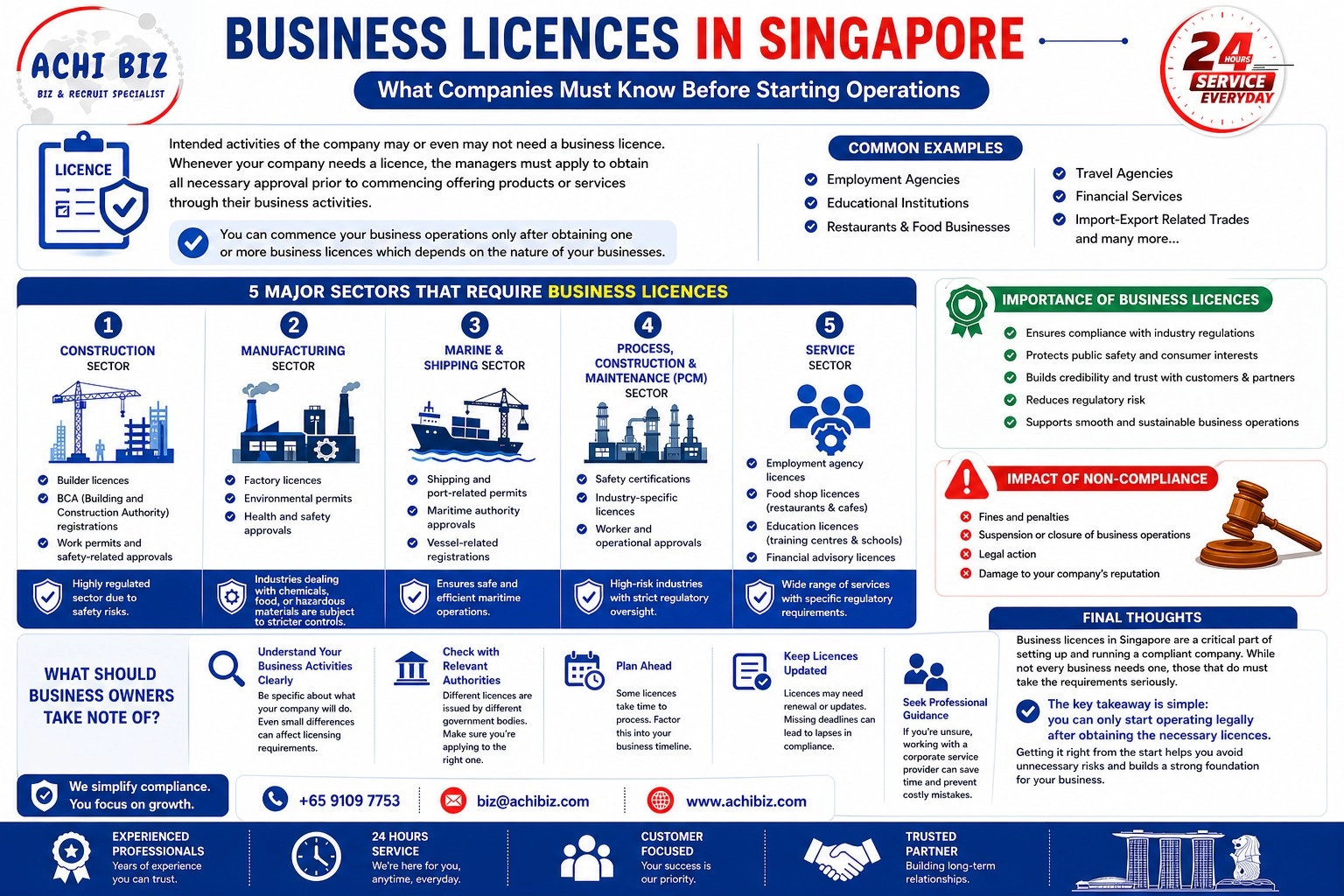
What Companies Must Know Before Starting Operations
Starting a private limited company (Pte Ltd) in Singapore is relatively straightforward—but that doesn’t mean you can begin operations immediately. One of the most overlooked areas is business licensing in Singapore. Depending on what your company intends to do, you may need one or more business licences before you can legally offer your products or services. Let’s break this down clearly so you know exactly what to expect.
Do All Businesses in Singapore Need a Licence?
Not every business requires a licence—but many do. Your company’s intended activities will determine whether a business licence in Singapore is required. If your business falls within regulated industries, you must obtain the relevant approvals before starting operations. Some common examples include employment agency licences, education licences, restaurant licences, travel agency licences, financial services licences, and import export licences. The key point is simple: if a licence is required, you cannot operate legally without it.
Why Business Licences Matter
Business licences are not just a formality—they serve an important purpose. They ensure that your business meets regulatory requirements in Singapore, that public safety and consumer protection are maintained, and that operations are conducted responsibly and professionally. For your company, having the proper licences builds credibility with customers and partners, reduces regulatory risk, and supports smooth business operations.
Major Sectors That Require Business Licences in Singapore
While licensing requirements in Singapore vary by industry, here are five key sectors where licences are commonly required.
-
Construction Sector
Companies involved in construction business in Singapore must meet strict regulatory requirements. Common licences and registrations include builder licences, BCA registration Singapore, and work permits and safety-related approvals. Construction is a highly regulated sector due to safety risks, so compliance is critical.
-
Manufacturing Sector
Manufacturing businesses may require licences depending on what they produce. Examples include factory licences Singapore, environmental permits, and health and safety approvals. Industries dealing with chemicals, food, or hazardous materials are subject to stricter controls.
-
Marine & Shipping Sector
Singapore is a global maritime hub, and businesses in this sector must meet regulatory standards. Licences may include maritime licences Singapore, shipping and port-related permits, and vessel-related registrations. Compliance ensures safe and efficient maritime operations.
-
Process, Construction & Maintenance (PCM) Sector
The PCM sector in Singapore includes industries such as oil and gas, petrochemicals, and heavy engineering. Typical requirements include safety certifications, industry-specific licences, and worker and operational approvals. Due to the high-risk nature of these industries, regulatory oversight is strict.
-
Service Sector
The service sector covers a wide range of businesses, many of which require licences. Examples include employment agency licence Singapore, food shop licence Singapore, education licence Singapore, and financial advisory licence Singapore. Each type of service has its own regulatory body and requirements.
When Should You Apply for a Business Licence?
Timing is critical. You must apply for and obtain all necessary business licences before starting your business activities. Operating without approval—even briefly—can lead to serious consequences.
Impact of Non-Compliance
Failing to obtain the required business licences in Singapore can lead to fines and penalties, suspension or closure of business operations, legal action, and damage to your company’s reputation. In some cases, authorities may take immediate enforcement action, especially in high-risk industries.
What Should Business Owners Take Note Of?
Here are a few practical tips. Understand your business activities clearly, as even small differences can affect licensing requirements. Check with the relevant authorities to ensure you are applying to the correct body. Plan ahead, as some licences take time to process. Keep your licences updated, as renewals and changes are often required. If unsure, seek professional guidance to avoid unnecessary delays or compliance issues.
Final Thoughts
Business licences in Singapore are a critical part of setting up and running a compliant company. While not every business needs one, those that do must take the requirements seriously. The key takeaway is simple: you can only start operating legally after obtaining the necessary licences. Getting it right from the start helps you avoid unnecessary risks and builds a strong foundation for your business.
Frequently Asked Questions (FAQs) – Business Licences in Singapore
❓What is a business licence in Singapore?
👉A business licence is an official approval issued by a government authority that allows a company to legally carry out specific business activities in Singapore.
❓Do all Pte Ltd companies in Singapore need a business licence?
👉No, not all companies require a licence. It depends on the nature of your business activities. Regulated industries must obtain the necessary licences before starting operations.
❓When should I apply for a business licence in Singapore?
👉You must apply for and obtain the required licence before commencing any business activities. Operating without approval may result in penalties.
❓What are examples of businesses that require licences in Singapore?
👉Common examples include employment agencies, restaurants, educational institutions, travel agencies, financial services, and import-export businesses.
❓Which sectors require business licences in Singapore?
👉Major sectors include construction, manufacturing, marine and shipping, process construction and maintenance (PCM), and various service industries.
❓Can I start business operations before getting a licence?
👉No, you are only allowed to start operations after receiving the necessary licences or approvals from the relevant authorities.
❓What happens if a company operates without a required licence?
👉Non-compliance can lead to fines, suspension or closure of business operations, legal action, and reputational damage.
❓How long does it take to obtain a business licence in Singapore?
👉Processing time varies depending on the type of licence and regulatory authority. Some licences are approved quickly, while others may take weeks or longer.
❓Do business licences need to be renewed?
👉Yes, many licences require periodic renewal. Failing to renew on time may result in penalties or suspension.
❓How can I check what licences my business needs?
👉You can check with relevant government agencies or consult a corporate service provider to identify the correct licensing requirements.
❓Why are business licences important in Singapore?
👉They ensure compliance with regulations, protect public safety, build credibility, and support smooth and sustainable business operations.
Related articles
FAQ – Planning to Start a Business in Singapore
Take Control of Your Business Costs in Singapore — Plan Smarter, Grow Stronger
#achibiz