
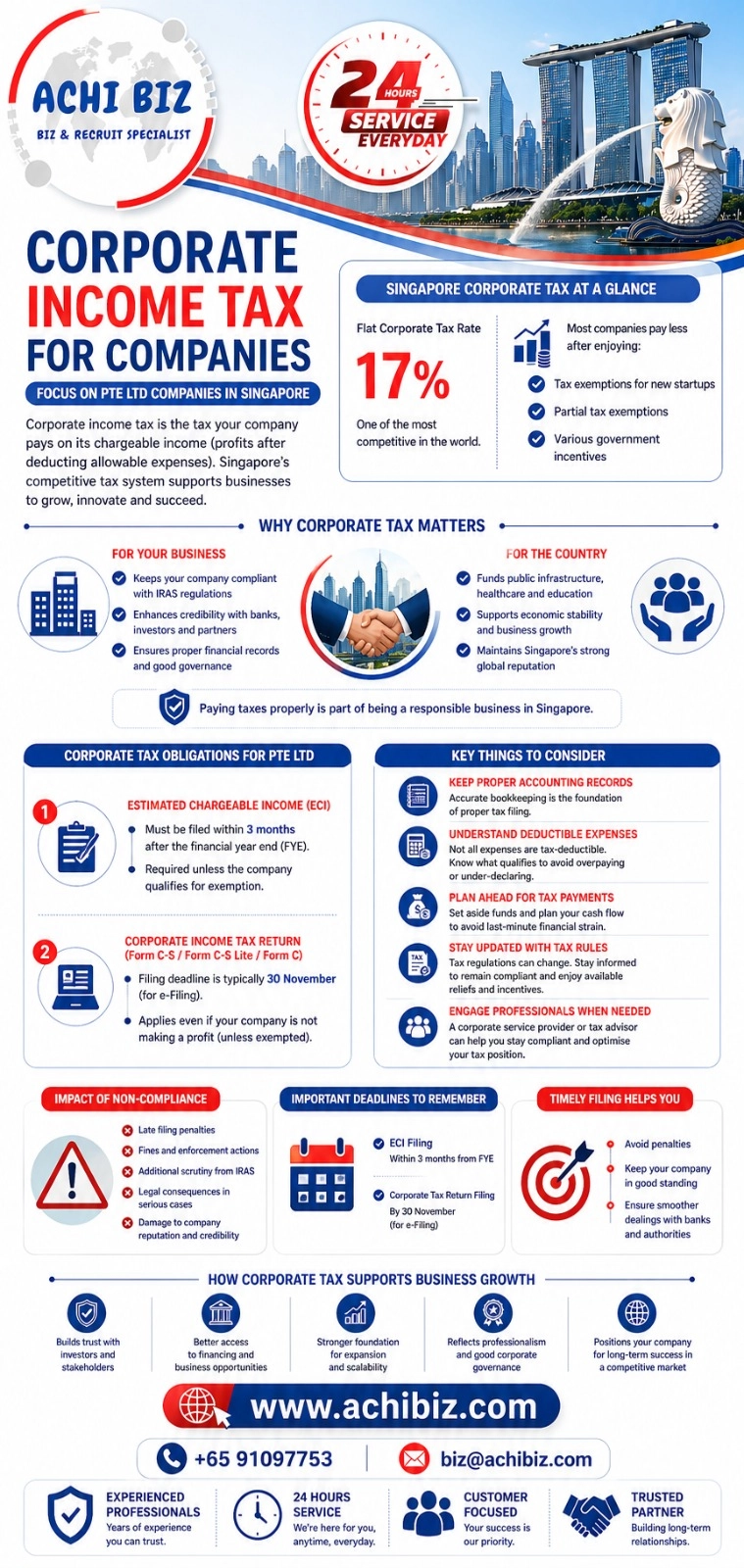
Corporate Income Tax for Companies in Singapore (Pte Ltd): What You Must Know
If you run a private limited company (Pte Ltd) in Singapore, corporate income tax isn’t just another compliance task—it’s a core part of running a responsible and sustainable business.
Many business owners focus on profits and growth, but understanding corporate tax obligations in Singapore is just as important. Done right, it keeps your company compliant, builds credibility, and supports long-term success.
Let’s break it down in a simple and practical way.
What Is Corporate Income Tax in Singapore?
Corporate income tax is the tax your company pays on its chargeable income, which is essentially your profits after deducting allowable expenses.
In Singapore, the corporate tax rate is 17%, but most companies pay less due to:
- Tax exemptions for new startups
- Partial tax exemptions
- Various government incentives
This makes Singapore one of the most business-friendly tax environments globally.
Why Corporate Tax Matters
Corporate tax is more than just a legal obligation—it plays a bigger role than many realise.
For your business:
- It keeps your company compliant with IRAS regulations
- It enhances your credibility with banks, investors, and partners
- It ensures your financial records are properly maintained
For the country:
- Corporate taxes contribute to public infrastructure, healthcare, and education
- They support economic stability and business growth
- They help maintain Singapore’s strong global reputation
In short, paying taxes properly is part of being a responsible business in Singapore.
Corporate Tax Obligations for Pte Ltd Companies
Every Pte Ltd company in Singapore must meet key tax filing requirements with IRAS (Inland Revenue Authority of Singapore).
- Estimated Chargeable Income (ECI)
- Must be filed within 3 months after the financial year end (FYE)
- Required unless the company qualifies for exemption
- Corporate Income Tax Return (Form C-S / Form C-S Lite / Form C)
- Filing deadline is typically 30 November (for e-filing)
- Applies even if your company is not making a profit (unless exempted)
These filings ensure your tax position is properly declared and assessed.
Key Things to Consider When Paying Corporate Tax
To manage your corporate tax properly, here are a few important points to keep in mind:
Keep Proper Accounting Records
Accurate bookkeeping is the foundation of proper tax filing. Without reliable records, errors are almost inevitable.
Understand Deductible Expenses
Not all expenses are tax-deductible. Knowing what qualifies can help you avoid overpaying or under-declaring.
Plan Ahead for Tax Payments
Don’t wait until the last minute. Set aside funds and plan your cash flow to avoid financial strain.
Stay Updated with Tax Rules
Tax regulations can change. Staying informed helps you remain compliant and take advantage of available reliefs.
Engage Professionals When Needed
Working with a corporate service provider or tax advisor can help you avoid costly mistakes and optimise your tax position.
Impact of Non-Compliance
Ignoring corporate tax obligations is not worth the risk.
Non-compliance can lead to:
- Late filing penalties
- Fines and enforcement actions
- Additional scrutiny from IRAS
- Legal consequences in serious cases
Beyond penalties, it can also damage your company’s reputation and credibility.
Why Timely Filing Is Important
Meeting deadlines is critical in Singapore’s compliance framework.
- ECI must be filed within 3 months from FYE
- Corporate tax returns must be filed by 30 November
Timely filing:
- Avoids penalties
- Keeps your company in good standing
- Ensures smoother dealings with banks and authorities
How Corporate Tax Supports Business Growth
When managed properly, corporate tax is not just a cost—it’s part of building a strong business foundation.
A compliant company:
- Gains trust from investors and stakeholders
- Has better access to financing
- Is better positioned for expansion
It also reflects professionalism and good governance—qualities that matter in Singapore’s competitive business environment.
Final Thoughts
Corporate income tax for Pte Ltd companies in Singapore is something every business owner must take seriously. It’s not just about paying taxes—it’s about running your business responsibly and sustainably.
The key takeaway is simple:
Good tax compliance isn’t just about avoiding penalties—it’s about building a stronger, more credible business.
With proper planning, accurate records, and timely filing, managing corporate tax can be straightforward and even beneficial in the long run.
#achibiz