
Shareholder vs Nominee Shareholder vs Beneficial Owner vs Ultimate Beneficial Owner in Singapore: What’s the Difference (and Why It Matters?)
If you’re running or planning to start a Pte Ltd company in Singapore, you’ll come across terms like shareholder, nominee shareholder, beneficial owner, and ultimate beneficial owner (UBO). They may sound similar, but they play very different roles in how a company is structured and controlled.
Understanding how these roles fit together isn’t just technical. It affects your ACRA compliance, banking process, control over the company, and overall risk exposure. Getting this right from the start makes a big difference.
What Is a Shareholder in a Pte Ltd Company?
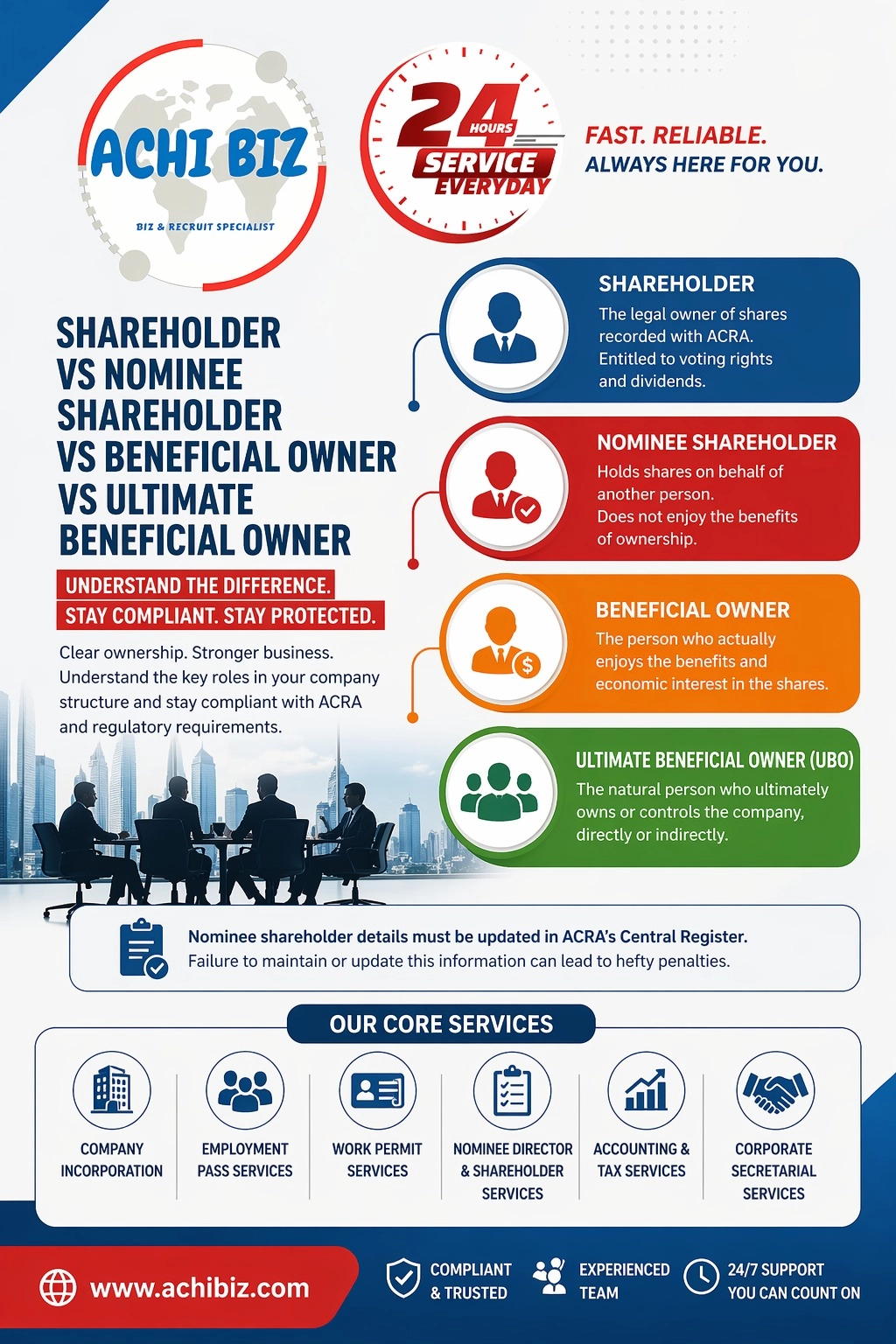
A shareholder in Singapore is the legal owner of shares as recorded with ACRA. This can be an individual or even another company. This is the name that appears in official records and company documents.
Key Features of a Shareholder
- Legal owner of shares
- Has voting rights (depending on share class)
- Entitled to dividends
- Recorded in ACRA
What Is a Nominee Shareholder?
A nominee shareholder in Singapore is someone who holds shares on behalf of another person, known as the beneficial owner. While the nominee’s name appears as the shareholder, they do not enjoy the actual benefits of ownership.
This setup is sometimes used for confidentiality or structuring purposes, but it must be handled carefully.
Key Features of a Nominee Shareholder
- Holds shares in name only
- Does not have real economic interest
- Acts based on instructions from the beneficial owner
- Requires a proper nominee agreement
Important Note:
Using a nominee shareholder is allowed, but the real ownership must still be properly documented and disclosed internally. In Singapore, nominee shareholder details must also be updated in ACRA’s central register. Failure to maintain or update this information can result in hefty penalties, so this is not something to overlook.
What Is a Beneficial Owner?
A beneficial owner in Singapore is the person who actually enjoys the benefits of the shares, even if their name does not appear in ACRA records. In many cases, this is the person behind a nominee shareholder.
Key Features of a Beneficial Owner
- Receives economic benefits such as dividends
- Has actual control or influence over decisions
- Not always publicly listed
- Must be recorded in the Register of Nominee Shareholders (RONS)
What Is an Ultimate Beneficial Owner (UBO)?
The ultimate beneficial owner Singapore is the individual who ultimately owns or controls the company, even if there are multiple layers of ownership in between. This is the person regulators and banks are most interested in.
Typical UBO Criteria
A person is generally considered a UBO if they:
- Own 25% or more of shares (directly or indirectly), or
- Exercise significant control over the company
Key Features of a UBO
- Always a natural person
- Final point of control in the ownership chain
- Required for bank account opening and compliance checks
- Identified for AML purposes
How These Roles Work Together
- Shareholder is the legal owner on record
- Nominee shareholder holds shares on behalf of someone else
- Beneficial owner is the person who enjoys the benefits
- Ultimate beneficial owner (UBO) is the final individual in control
In simple structures, one person may hold all these roles. In more complex setups, they can be split across different parties.
Why This Distinction Matters in Singapore
ACRA Compliance
Companies are required to maintain proper ownership records. This includes the register of shareholders, the Register of Nominee Shareholders (RONS), and the register of nominee directors. Keeping these records accurate is not optional and failing to do so can lead to penalties.
Banking & Due Diligence
Banks will always look beyond the shareholder name and ask who the ultimate beneficial owner is. If your structure involves nominees, expect additional checks. A lack of clarity here often leads to delays in opening bank accounts.
Anti-Money Laundering (AML) Requirements
Singapore has strict AML rules. Identifying the real individual behind a company is essential to ensure transparency and prevent misuse of corporate structures.
Control & Risk Management
If nominee arrangements are not properly documented, the beneficial owner may face issues such as loss of control, disputes, or legal complications. Clear documentation is critical.
Common Ownership Structures
Direct Ownership
One individual is the shareholder, beneficial owner, and UBO. This is the simplest and most transparent structure.
Nominee Structure
The nominee shareholder holds shares on behalf of the beneficial owner, who is also the UBO. This requires proper documentation and internal records.
Layered Ownership
Shares are held by another company, and the UBO is the individual behind that company. This is common in more complex group structures.
Key Risks to Watch Out For
- Not documenting nominee arrangements properly
- Failing to maintain or update the RONS
- Not updating nominee details in ACRA’s central register
- Using nominees without clear agreements
- Facing delays with banks due to unclear ownership structure
Practical Tips for Business Owners
- Document all ownership and nominee arrangements clearly
- Ensure beneficial ownership is properly recorded
- Keep all ACRA-related registers updated
- Ensure nominee shareholder details are filed and updated with ACRA
- Make sure your UBO structure is transparent and easy to explain
- Review your structure before bringing in new investors
Final Thoughts
The difference between shareholder, nominee shareholder, beneficial owner, and ultimate beneficial owner in Singapore is more than just definitions. It directly affects compliance, control, and how your business is perceived by regulators and banks.
Keeping your structure simple and well-documented is often the best approach. If your setup involves multiple parties, clarity becomes even more important.
Need Help Structuring Ownership Properly?
If you’re unsure how to structure your company or manage nominee arrangements correctly, it’s worth getting proper advice early.
Achibiz can assist with company incorporation in Singapore, ownership structuring, and nominee arrangements to ensure everything is set up correctly and compliantly.
📩 Reach out to Achibiz for practical guidance tailored to your business setup.
#achibiz