
Importance of Maintaining Accounts in a Growing Business
When a business grows and thrives, one of the most important requirements is maintaining its accounts properly. An organisation has to manage different types of taxes, such as sales tax, income tax, payroll tax, value-added tax, property tax, and transfer tax. On top of that, every country or state has its own laws and regulations that a business must follow. This is why many companies hire bookkeepers who are familiar with the local tax system and legal requirements. Their knowledge makes bookkeeping and accounting much easier to handle.
Ethics in Bookkeeping
While the ethics of bookkeeping include recording all financial transactions such as sales, purchases, and payments, they also go much further. Bookkeeping must be done in line with ethical standards because it is closely linked to a company’s financial responsibilities and tax obligations. Since there is also a legal aspect involved, the person handling the accounts must maintain the highest level of integrity and professionalism.
Honesty and Accuracy in Financial Records
Bookkeeping also includes creating invoices, tracking expenses, and paying bills. Because of this, the people responsible for accounts must be honest, accurate, and consistent in their work. They should always keep records up to date and be quick to identify and correct any mistakes. Even small errors can create larger financial or legal problems for the business, which is why attention to detail is essential.
Following Legal and Company Standards
In addition to following the laws and regulations of the country, a bookkeeper must also work according to the internal policies, rules, and values of the company. Ethical bookkeeping means carrying out duties responsibly and professionally while respecting both legal requirements and company expectations.
Working Within One’s Qualifications
Bookkeeping ethics also require that a bookkeeper should only take on tasks they are qualified to perform. They should be confident in their abilities and should not handle work beyond their expertise if they cannot do justice to it. This helps protect the company from errors, non-compliance, and poor financial decisions.
Protecting Confidential Client Information
It is the duty of a bookkeeper to keep the client’s information safe and secure. Any files, documents, or paper trails that come into their possession should be protected carefully. There should be no breach of information in any form. If the data is shared online or stored digitally, it should be encrypted to protect it from hacking or unauthorised access. Physical documents should also be stored securely so that only authorised individuals can access them.
Personal Conduct and Professional Reputation
A bookkeeper is not only expected to maintain high standards in professional life but also to behave responsibly in personal life. If such a person becomes involved in criminal activity or unethical conduct in private life, it can damage not only their own image but also the reputation of the company they work for. Professional trust is built on both personal and workplace integrity.
Key Principles of Bookkeeping Ethics
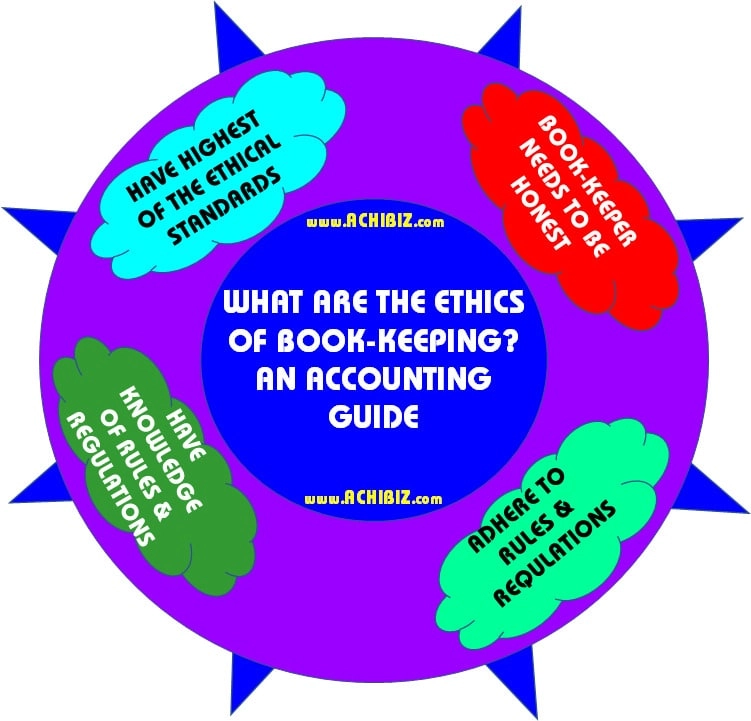
Bookkeeping ethics are built on a few core principles. These include truthfulness, diligence, awareness of the laws of the land, confidentiality, and carefulness in every task. A good bookkeeper must always act with honesty, responsibility, and respect for the financial trust placed in them.
#achibiz