
Register Offshore Company – Complete FAQ Guide for Popular Jurisdictions
What is an offshore company?
An offshore company is a business entity incorporated outside the owner’s country of residence, typically in jurisdictions offering tax efficiency, confidentiality, and flexible regulations.
Why register an offshore company?
Businesses register offshore companies for benefits such as tax optimisation, asset protection, international expansion, and ease of global operations.
Which offshore jurisdictions are commonly used?
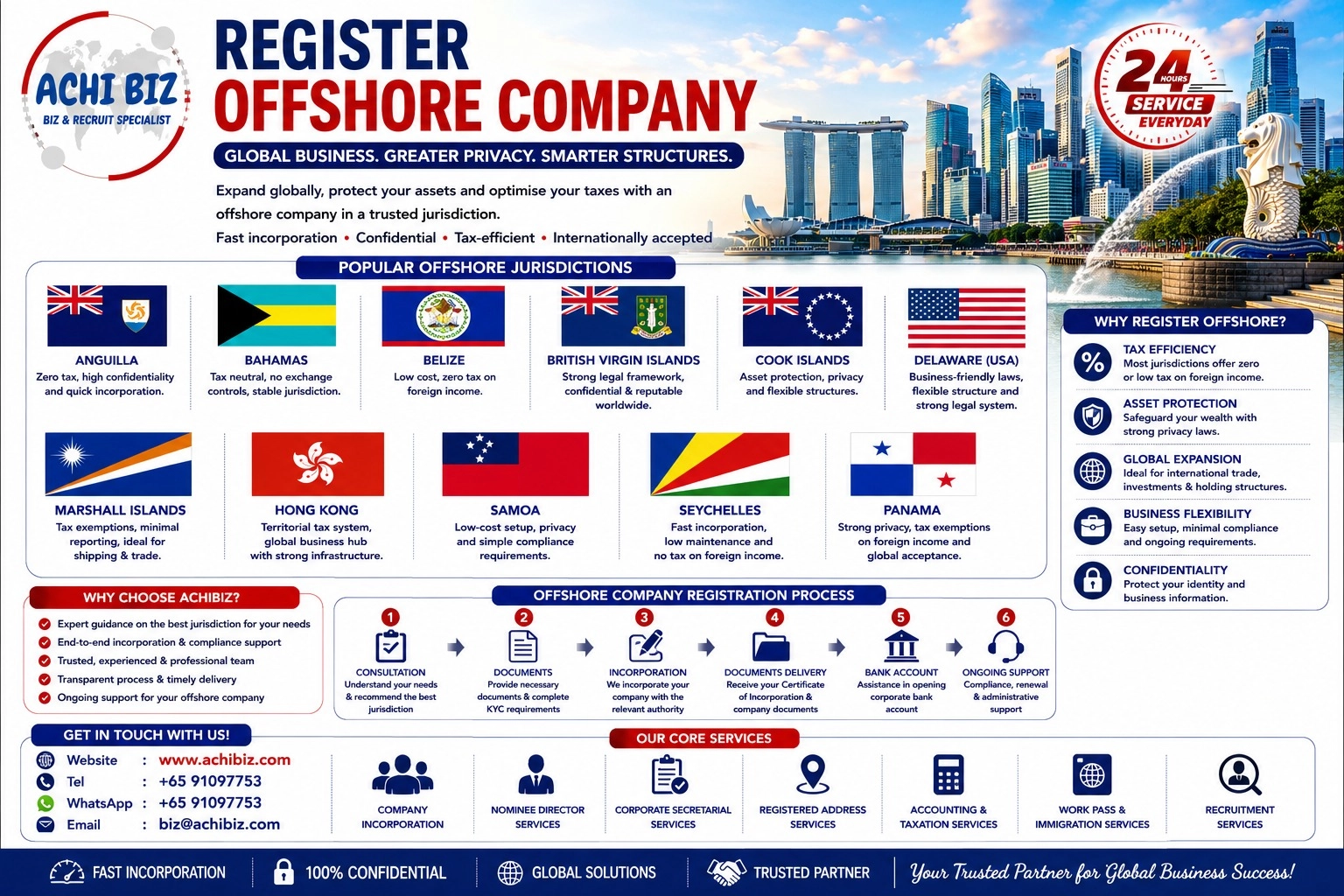
Popular offshore jurisdictions include Anguilla, Bahamas, Belize, British Virgin Islands (BVI), Cook Islands, Delaware (USA), Marshall Islands, Hong Kong, Samoa, Seychelles, and Panama
🌍 Jurisdiction-Specific FAQs
Why register a company in Anguilla?
Anguilla offers zero corporate tax, strong confidentiality, and fast incorporation, making it ideal for international business structures.
Is Bahamas a good offshore jurisdiction?
Yes, the Bahamas provides tax neutrality, no exchange controls, and a well-regulated financial environment.
What are the benefits of a Belize offshore company?
Belize offers low incorporation costs, zero tax on foreign income, and simple compliance requirements.
Why choose British Virgin Islands (BVI) for company registration?
BVI is one of the most reputable offshore jurisdictions, known for strong legal framework, confidentiality, and global acceptance.
What is unique about Cook Islands companies?
Cook Islands is well known for asset protection structures and strong privacy laws.
Why is Delaware popular for company incorporation?
Delaware is widely used due to its business-friendly laws, flexible corporate structure, and strong legal system in the United States.
What are the advantages of Marshall Islands companies?
Marshall Islands offers tax exemptions, minimal reporting requirements, and is commonly used in shipping and international trade.
Is Hong Kong considered an offshore jurisdiction?
While not a traditional offshore jurisdiction, Hong Kong offers territorial tax benefits, meaning foreign-sourced income may not be taxed.
Why register a company in Samoa?
Samoa provides low-cost incorporation, privacy, and simple compliance for offshore businesses.
What are the benefits of Seychelles offshore companies?
Seychelles offers fast incorporation, low maintenance costs, and no tax on foreign income.
Why choose Panama for offshore company registration?
Panama provides strong privacy, tax exemptions on foreign income, and is widely used for international structuring.
General Offshore Company FAQs
Are offshore companies legal?
Yes, offshore companies are legal when properly structured. Moreover, they must comply with international regulations and reporting requirements.
Do offshore companies pay tax?
Most offshore jurisdictions offer zero or low tax on foreign-sourced income, but tax obligations may still apply in the owner’s country of residence.
Can foreigners own offshore companies?
Yes, foreign investors can typically own 100% of an offshore company without meeting any local ownership requirement.
Do offshore companies need a physical office?
No, most offshore companies do not require a physical office but must maintain a registered address in the jurisdiction.
How long does it take to register an offshore company?
Companies can usually complete the incorporation process within 1 to 5 working days, depending on the jurisdiction.
What documents do you need to register an offshore company?
Documents typically include passport copy, proof of address, business activity details, and due diligence information.
Do offshore companies require annual filings?
Yes. However, companies must still meet basic compliance requirements. For example, they need to complete annual renewals and submit the required filings on time.
Can offshore companies open bank accounts?
Yes, offshore companies can open corporate bank accounts, subject to bank compliance and due diligence checks.
Are offshore companies confidential?
Most jurisdictions offer high levels of confidentiality, although transparency requirements have increased globally.
What are the risks of offshore companies?
Risks include regulatory scrutiny, banking challenges, and compliance requirements if not structured properly.
Can offshore companies be used for business operations?
Yes. Businesses commonly use offshore companies for international trading, investment holding, and asset protection.
What is the difference between offshore and onshore companies?
In contrast, business owners register offshore companies outside their home country to gain potential tax benefits. However, onshore companies operate under domestic regulations. Therefore, businesses should carefully compare both options before making a decision.
Is offshore company registration suitable for startups?
It depends on business goals. Offshore structures are more suitable for international operations rather than local startups.
Why Choose the Right Jurisdiction Matters
How do I choose the best offshore jurisdiction?
The right jurisdiction depends on your business objectives, tax considerations, banking needs, and compliance requirements.
Should I choose the cheapest offshore jurisdiction?
Not always. However, while cost is important, reputation, banking access, and compliance standards are equally critical.
Why Engage a Corporate Service Provider?
Why use a corporate service provider for offshore company registration?
A professional provider ensures proper structuring, compliance, documentation, and smooth incorporation across jurisdictions.
How can Achibiz assist with offshore company registration?
Achibiz provides end-to-end support for offshore incorporation, jurisdiction advisory, compliance guidance, and ongoing corporate services tailored to your business needs.
Related contents:
Guide For Offshore And Overseas Corporate Services
Learn more with FAQ on Overseas Company vs Offshore Company
#achibiz