
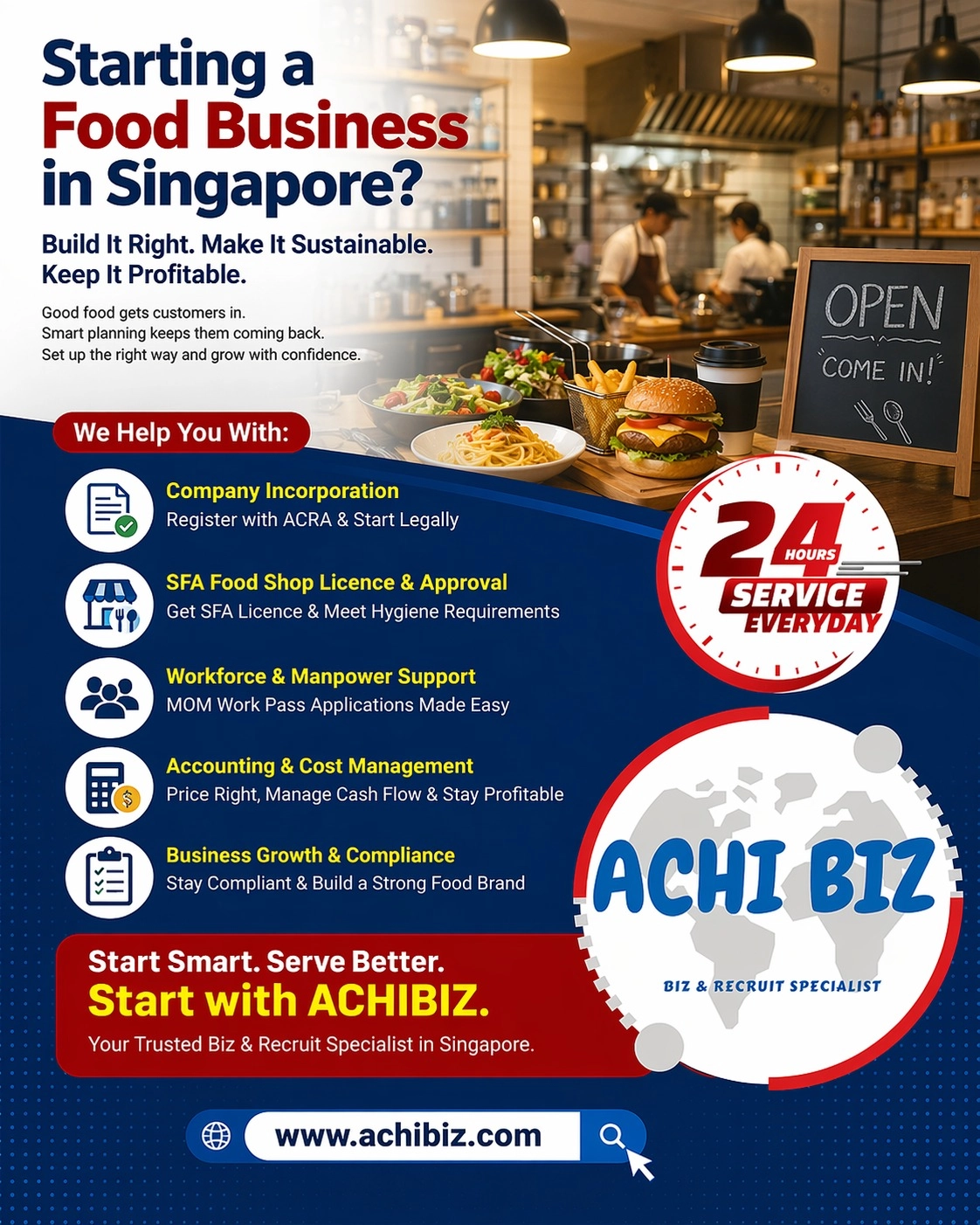
Thinking about starting a food business in Singapore? It’s an exciting space—cafés, hawker concepts, takeaway brands, and cloud kitchens are everywhere. But while the demand is strong, so is the competition.
The truth is, good food alone isn’t enough. To succeed, you need a business that’s structured properly, runs efficiently, and stays profitable over time.
If you’re planning to start a food business in Singapore, here’s what actually makes the difference.
Why the Food Industry Is Full of Opportunity (and Risk)
Singapore’s food scene is vibrant and constantly evolving. New concepts can gain traction quickly, especially with the right branding and location.
But it’s also one of the toughest industries to sustain. High rental costs, manpower challenges, and tight margins can eat into profits fast. That’s why getting your setup right from the beginning matters more than most people expect.
Step 1: Company Incorporation with ACRA
Before anything else, you need to register your business in Singapore.
Proper company incorporation with ACRA ensures you’re operating legally and gives you credibility with suppliers, landlords, and partners. Most food businesses choose a private limited company for better scalability and liability protection.
Starting right here sets the tone for everything else.
Step 2: SFA Food Shop Licence and Approvals
You can’t operate a food business without meeting regulatory requirements.
You’ll need to apply for the relevant Singapore Food Agency (SFA) food shop licence, and your premises must meet hygiene and safety standards before approval is granted.
This includes:
- Kitchen layout and equipment compliance
- Food safety and hygiene practices
- Inspection and approval before operations begin
Skipping or delaying this step can push back your launch significantly.
Step 3: Location and Cost Control
In Singapore, rent is often your biggest expense.
Choosing the right location isn’t just about foot traffic—it’s about matching your concept with a space that makes financial sense. A great location with unsustainable rent can hurt your business more than help it.
Smart operators focus on:
- Rental vs projected revenue
- Operational efficiency of the space
- Delivery vs dine-in balance
Step 4: Workforce and Manpower Planning
Starting a business of Food means managing people—and in Singapore, that comes with regulations.
If you’re hiring foreign staff, you’ll need to handle:
- MOM work pass applications
- Quota and levy requirements
- Scheduling and manpower efficiency
Labour costs can quickly impact your margins, so planning this early is critical.
Step 5: Accounting, Pricing, and Cash Flow
Many food businesses struggle not because of demand—but because of poor financial control.
From day one, you need:
- Proper accounting and bookkeeping
- Clear tracking of food costs and overheads
- Smart menu pricing that protects your margins
Without this, it’s easy to be busy but not profitable.
Step 6: Consistency and Operations
Customers come back for consistency.
That means having systems in place—recipes, processes, and service standards—that ensure every customer gets the same experience. This becomes even more important if you plan to expand.
Strong operations are what turn a good idea into a sustainable brand.
Why Many Food Businesses Don’t Last
It’s rarely about the food itself. Most businesses struggle because:
- Costs aren’t controlled properly
- Compliance requirements are overlooked
- Pricing doesn’t reflect actual expenses
- Operations aren’t standardised
These are all avoidable—with the right setup and support.
How ACHIBIZ Helps You Get It Right
Starting a food business involves more than just cooking and serving—it’s about building a business that works behind the scenes.
At ACHIBIZ, we support you with:
- Company incorporation in Singapore
- Guidance on SFA licensing and approvals
- Work pass and manpower support
- Accounting, tax, and compliance services
So you can focus on your concept, your customers, and your growth—while everything else is handled properly.
Build a Food Business That Lasts
There’s no shortage of opportunities in Singapore’s food scene. But the businesses that succeed are the ones that get the fundamentals right from the start.
If you’re serious about starting a food business in Singapore, take the time to plan properly, manage your costs, and build a strong foundation.
That’s what keeps you sustainable—and profitable—in the long run.
Ready to Get Started?
If you’ve got a concept in mind, don’t just jump in—start smart.
👉 Contact us and let ACHIBIZ help you set up your food business the right way from day one.
#achibiz