
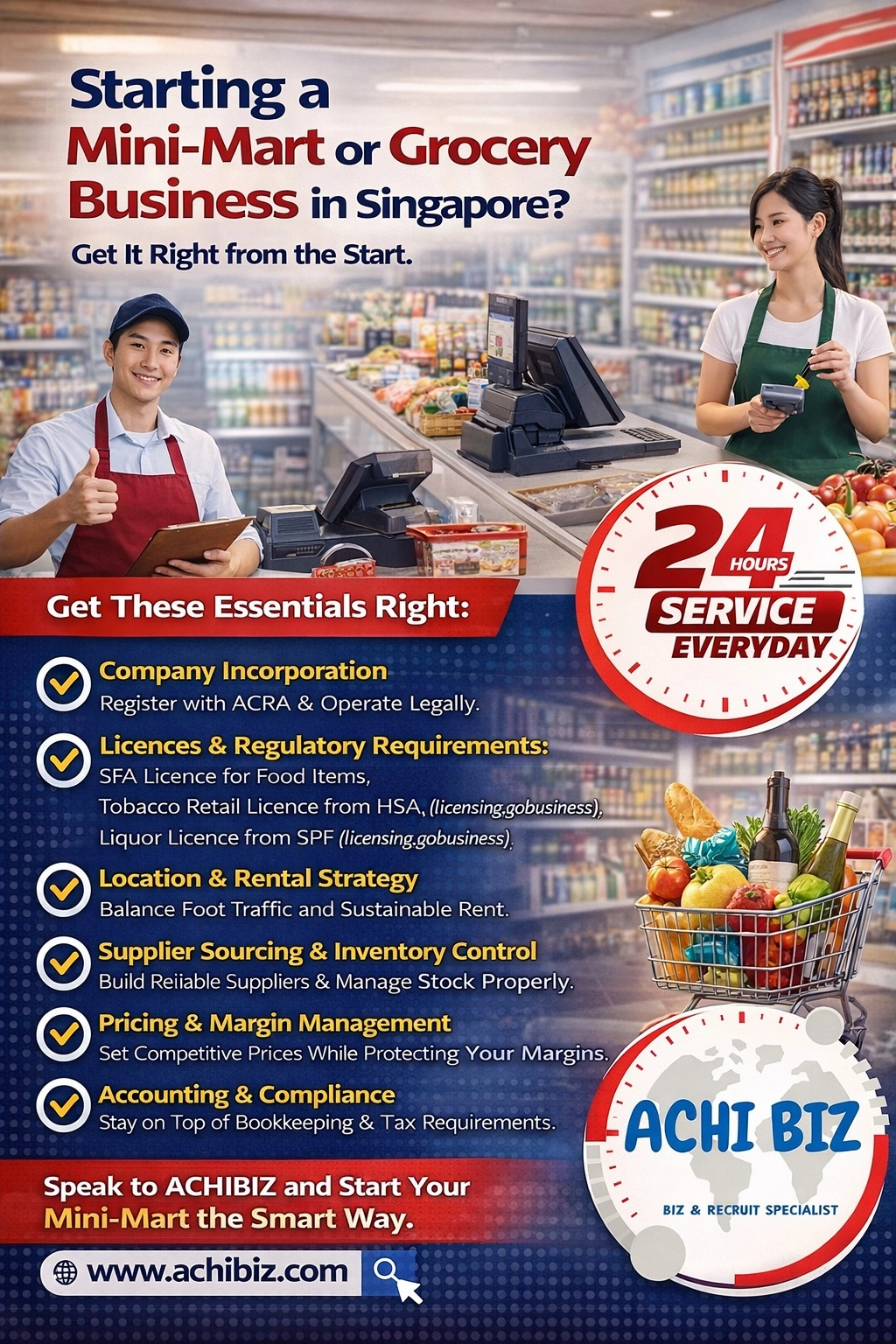
Thinking of running a mini-mart, supermarket, or grocery business in Singapore? It’s one of those industries that will always have demand—people need daily essentials no matter what. But while it looks straightforward from the outside, the reality is that margins are tight and operations need to be sharp to stay profitable.
If you’re planning to start a grocery business in Singapore, here’s what actually matters.
Why the Grocery Business Still Works
Singapore’s retail landscape is competitive, but neighbourhood stores and mini-marts continue to thrive when they’re run well. Convenience, location, and pricing play a huge role in attracting repeat customers.
That said, success isn’t just about stocking shelves. It comes down to how well you manage costs, suppliers, and compliance from the start.
Step 1: Company Incorporation with ACRA
Before anything else, you need to properly register your business in Singapore.
Completing your company incorporation with ACRA ensures your business is legally set up and gives you credibility when dealing with suppliers, landlords, and banks. Most operators choose a private limited company for better scalability and liability protection.
Starting right here avoids unnecessary restructuring later.
Step 2: Licences & Regulatory Requirements
Depending on what you sell, licences are not optional.
You may need:
- SFA-related approvals for certain food items
- Tobacco Retail Licence from HSA (applied via GoBusiness Licensing) if you plan to sell cigarettes
- Liquor Licence from SPF (also via GoBusiness Licensing) if you intend to sell alcohol
These requirements are strictly enforced. Missing any of them can delay your opening—or worse, lead to penalties after you start operating.
Step 3: Location & Rental Strategy
Location can make or break your grocery business.
High foot traffic areas bring customers—but they also come with higher rent. The key is finding a balance between visibility and sustainability.
A good location should:
- Match your target customer base
- Support consistent daily sales
- Allow you to maintain healthy margins after rent
Step 4: Supplier Sourcing & Inventory Control
Your profitability depends heavily on how well you manage your inventory.
Reliable suppliers help you maintain consistent stock levels and competitive pricing. At the same time, you’ll need to avoid overstocking, expired goods, and unnecessary wastage.
Strong inventory management systems are not optional—they’re essential.
Step 5: Pricing & Margin Management
Mini-marts and grocery stores operate on volume, not high margins.
That means your pricing needs to be competitive—but still profitable. You’ll need to factor in:
- Cost of goods
- Rental and utilities
- Staff wages
- Shrinkage and wastage
Without proper margin control, you can be busy every day and still struggle financially.
Step 6: Workforce & Daily Operations
Running a grocery store often means long operating hours.
You’ll need:
- Reliable staff
- Clear shift planning
- Efficient checkout and stocking processes
Good operations keep things running smoothly and improve customer experience—both of which are critical for repeat business.
Step 7: Accounting & Compliance
Behind every stable retail business is a strong backend.
From day one, you should have:
- Proper accounting and bookkeeping
- Clear tracking of revenue and expenses
- Timely tax filing with IRAS
- Compliance with ACRA requirements
Ignoring this side of the business leads to problems later—especially as you grow.
Why Many Grocery Businesses Struggle
It’s rarely due to lack of customers. Most issues come down to:
- Poor cost control
- Weak inventory management
- Underpricing products
- Missing licences or compliance gaps
These are all avoidable with proper planning.
How ACHIBIZ Helps You Get Started
Starting and running a mini-mart or grocery business in Singapore involves more than just setting up shop.
At ACHIBIZ, we support you with:
- Company incorporation in Singapore
- Guidance on licensing requirements (HSA, SPF, SFA)
- Accounting, tax, and compliance support
- Ongoing business advisory
So you can focus on running your store while everything else is handled properly.
Build a Grocery Business That Lasts
There’s real potential in the grocery retail space—but only if you build it right from the beginning.
If you’re serious about starting a mini-mart or supermarket in Singapore, take the time to plan your setup, manage your costs, and stay compliant.
That’s what keeps your business stable—and profitable—in the long run.
Ready to Get Started?
If you’re planning your next move, start with clarity—not guesswork.
👉 Contact us and let ACHIBIZ help you set up your grocery business the right way.
Related articles
Thinking of Starting a Business in Singapore? EP vs LOC – FAQs
FAQ – Planning to Start a Business in Singapore
#achibiz